The Margaux appellation
The terroir of Margaux is among the most remarkable in the Médoc. It is no coincidence that the appellation is home to 21 of the 61 Grands Crus Classés of 1855.
Situated between the Gironde Estuary and the Atlantic Ocean, Margaux benefits from a temperate climate and gravel-rich soils that are particularly well suited to growing vines. This exceptional terroir allows the grapes to ripen slowly, giving rise to wines renowned for their finesse, elegance and ageing potential.
For generations, Margaux’s winegrowers have drawn out the full potential of this remarkable terroir through their exacting expertise, making Margaux one of Bordeaux’s most prestigious appellations.
Margaux’s history
The vine has been cultivated in the Margaux area since Gallo-Roman times. However, it was from the 17th century onwards, following drainage work carried out under Louis XIII, that the vineyards truly began to flourish and gradually build their reputation.
Recognised as an Appellation d’Origine Contrôlée since 10 August 1954, the Margaux appellation now covers more than 1,500 hectares. It brings together estates with diverse profiles, united by the same commitment to quality and a deep connection to their terroir.
Over the generations, renowned winegrowing families have helped shape the international reputation of Margaux wines, now regarded among the world’s most prestigious.
Our vineyard and grape varieties
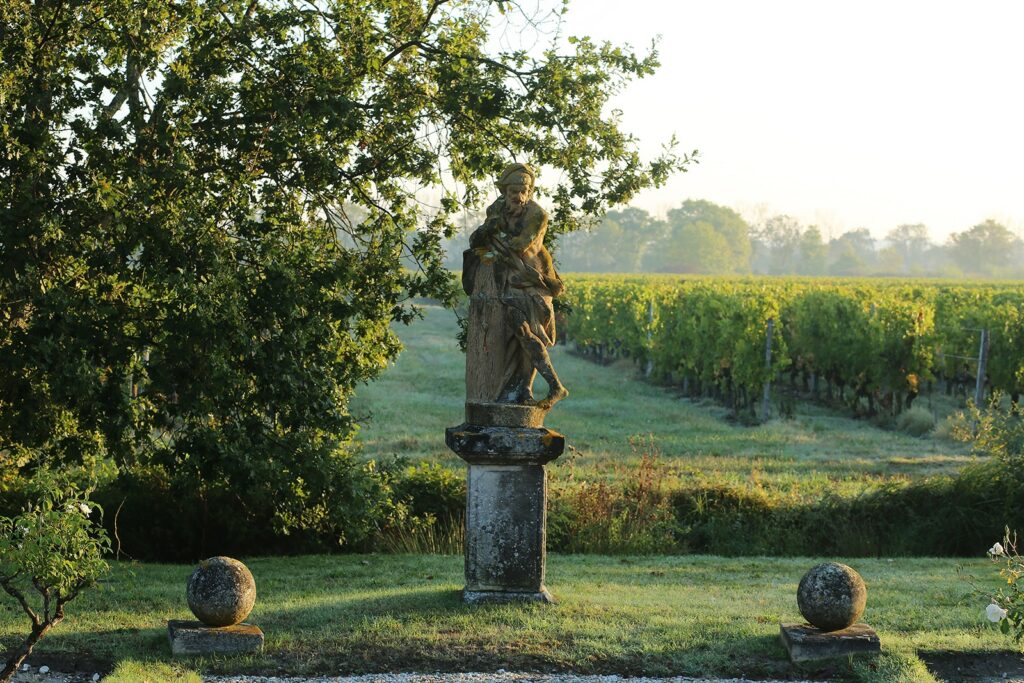
Our 1,500-hectare vineyard stretches across the communes of Arsac, Labarde, Margaux-Cantenac and Soussans. Set on gravelly rises bordered by the estuary marshes to the east and the sandy Landes plateau forests to the west, the first vines were planted here in Gallo-Roman times.
Although Carmenère and Malbec (also known as Côt) are permitted varieties in the Margaux appellation, they are no longer cultivated here. Today, the vineyard is dominated by four main grape varieties: Cabernet Sauvignon, Merlot, Cabernet Franc and Petit Verdot.
Cabernet sauvignon
The star grape variety with 60% of the planted area, harvested last, gives Margaux its tight, elegant tannic structure. It gives the wine a much-appreciated potential to age, in addition to its particularly rich aromatic qualities.
Merlot
Merlot is the perfect complementary grape variety and is used in almost all blends. Harvested first, it contributes fruity flavours, roundness and a voluptuous generosity, along with its intense colour.
Cabernet franc
Cultivated in smaller quantities, it is harvested between Merlot and Cabernet Sauvignon. It brings freshness, finesse and aromatic elegance, adding further depth and balance to the blend.
Petit verdot
This is the latest variety of all, harvested after the Cabernet Sauvignon. At optimum maturity, it is included in the blend of many properties’ first wines, like a “pinch of salt”, to enhance the colour, add spicy aromas and strengthen the tannic structure.