Sustainable winegrowing
Respecting our territory,
and encouraging biodiversity
The Margaux appellation is home to an exceptional natural heritage, where vineyards, woodlands, meadows and wetlands coexist in harmony. The Labarde and Soussans marshes, both part of the Natura 2000 network, are a testament to this remarkable environmental diversity.
Aware of the responsibility that comes with such an exceptional terroir, Margaux winegrowers have been working together for several years to promote more sustainable winegrowing practices that respect both the environment and the people who care for this land.
Today, 80% of the vineyard is covered by an environmental certification, reflecting a shared commitment to taking concrete action for future generations.
Our approach
Working alongside scientific experts to ensure the robustness of the methodologies used, the Margaux winegrowers have undertaken a comprehensive diagnostic approach to deepen their understanding of soil life, protected wildlife and beneficial species. These studies have helped identify concrete actions involving winegrowers, including restoring ecological connectivity and protecting water resources.
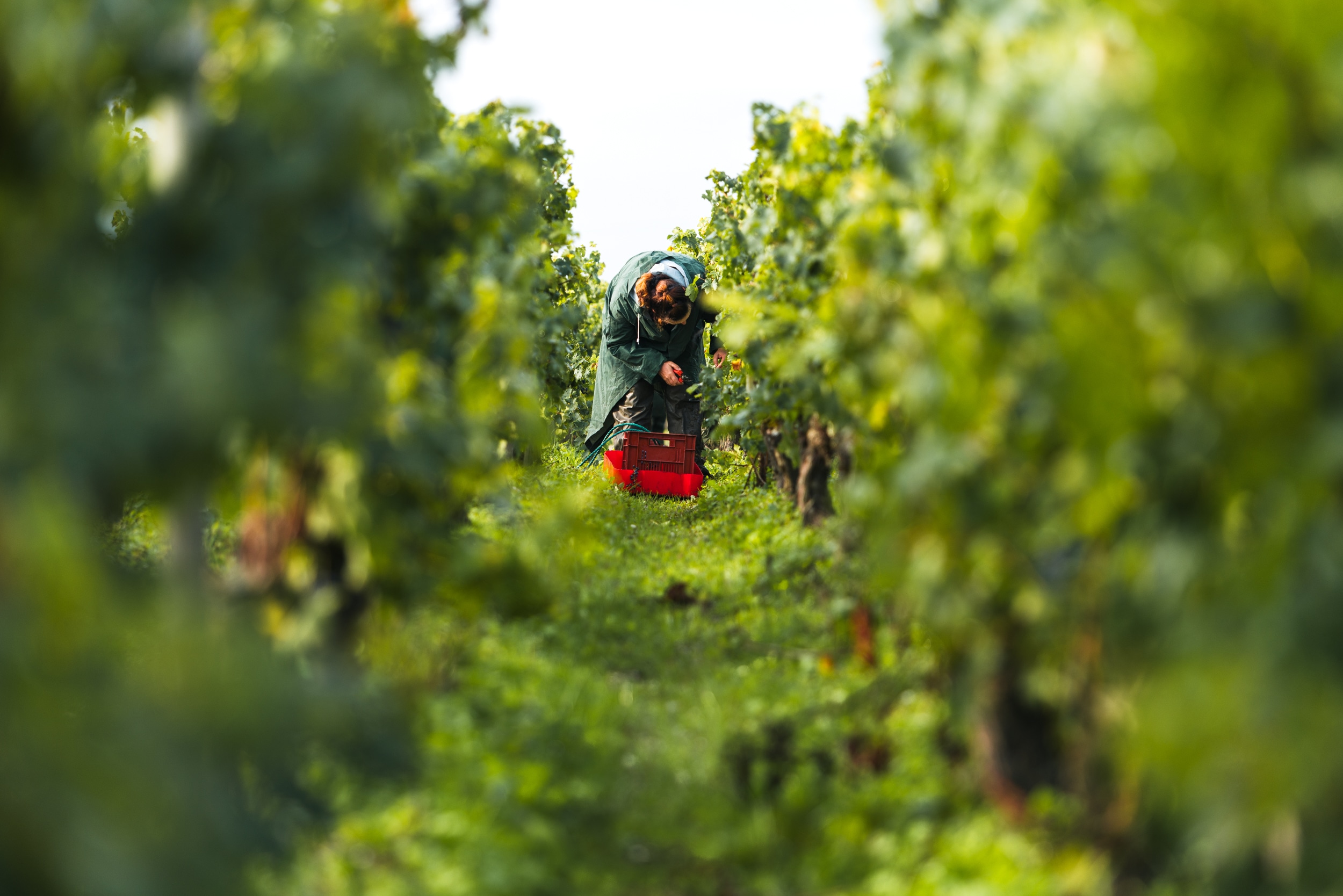
Committed winegrowers
A collaborative approach
Since 2013, the winegrowers of the Margaux appellation have been working collectively to preserve and restore biodiversity across their territory through the Margaux, a Biodiversity Terroir initiative.
The initiative brings together winegrowers, scientists, naturalists and local stakeholders to better understand and protect the area’s natural habitats. From the outset, the Margaux Winegrowers’ Association partnered with VITINNOV* and several experts in nature conservation.
The initiative has since grown through a range of partnerships and projects, notably with the Médoc Regional Natural Park and the municipalities within the appellation, with the support of institutional partners such as the CIVB and the Nouvelle-Aquitaine Region. Recognised by the French Ministry of Agriculture as part of the GIEE programme, it has also been part of the regional VITIREV project since 2020, supporting the development of more sustainable winegrowing practices that respect both people and the environment.
*A technology transfer unit of the Institute of Vine and Wine Sciences (ISVV), affiliated with Bordeaux Sciences Agro.
Key aspects of sustainable viticulture
Landscapes
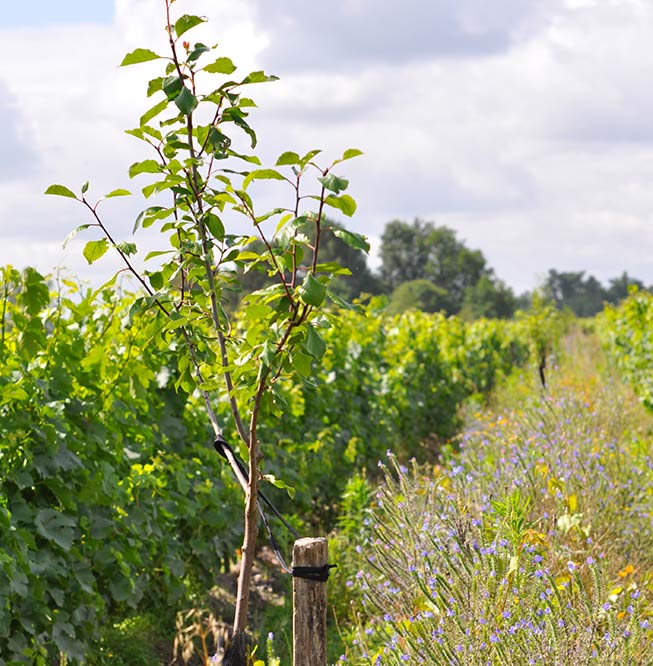
The vines tend to be concentrated in large blocks in certain areas, so that in such areas there are now relatively few refuges for fauna and flora. To remedy this homogenisation of the landscape, the winegrowers have undertaken the planting and maintenance of rural hedges (10km), and adopted the practice of mowing the vegetation in ditches and around the edges of plots later than previously (150 hectares of late mowing)
Water
The appellation’s soil tends to be permeable, well-drained and not very fertile. Rainwater (about 800 mm/year) takes different routes, either running off or being absorbed, depending on whether or not the soil is covered with vegetation.
Aware of the consequences of winegrowing practices on the quality of water, which is essential to life, winegrowers have mobilized to:
- reduce the use of inputs: 82% of the vines are herbicide-free,
- encourage absorption of water by the soil and reduce erosion by restoring an ecological network in the vineyards (hedges, late mowing).
The ambition is to make these practices widespread.

Wildlife
An inventory of local wildlife beneficial to viticulture was made in 2015: 185 species of bees, 52 species of birds, 17 species of bats and 30 species of butterflies have been recorded by the LPO (French League for the Protection of Birds). Four initiatives have been established to encourage the development of this biodiversity: late mowing around plots, maintenance and planting of hedges and isolated trees, and the sowing of plots that have been left fallow after the pulling up of vines.
Today, 350 actions have been implemented, representing 150 ha of late mowing, 10 km of hedges and 42 ha of fallow plots. The widespread, more massive adoption of these practices remains an important challenge for the appellation.
Life in the soil
While the geological characteristics of the soil in wine-growing areas has been studied for many years, those of the life forms in such soil is a relatively new subject. From 2018 to 2020, the Margaux Appellation participated in a research project aimed at understanding this biological aspect of the soil in order to identify the practices that best preserve it (PhytAE project). The soil at 23 properties was analysed to study its biodiversity. In terms of both species and numbers, there were more beneficial predators, such as spiders (103 species) and ground beetles (52 species), in plots where ploughing was less frequent and less deep.
Certification

ORGANIC CERTIFICATION
French and European certification
This approach is based on a guarantee that no synthetic chemicals are used. Agriculture Biologique (Organic Agriculture) certification, symbolized by one of the two logos, is issued by an independent body

BIODYNAMIC
CERTIFICATION
This certification is based on compliance with certain specifications and is awarded by inspection bodies such as Demeter and Biodyvin. It is a form of organic agriculture based on the use of composts and natural biodynamic preparations.

HEV CERTIFICATION
for a period of three years
HEV or High Environmental Value certification takes into account the impact of agricultural practices on the natural environment. The highest level of certification is level 3 (HEV3). The latter represents a level of excellence based on the respect of four indicators: biodiversity, phytosanitary strategy, management of fertilizers and water resources.

TERRA VITIS
CERTIFICATION
This environmental certification takes a continuous improvement approach, based on environmental, economic and social aspects of sustainable development. It is obtained by complying with a set of specifications